


The truth about plug-in solar savings
Interest in plug-in solar panels is growing rapidly as major retailers such as Lidl and Aldi have introduced affordable solar kits to their product range.
Google searches for the cheaper solar panels are up 30% since the start of summer, as Brits flock to the shelves to get their hands on the cost saving energy alternative.
Marketed as a lower cost alternative to traditional rooftop systems, these products are attracting homeowners keen to reduce their energy bills without committing to a larger upfront investment. However, while the prospect of generating your own electricity for a few hundred pounds is appealing, experts warn that expectations around savings should be realistic.
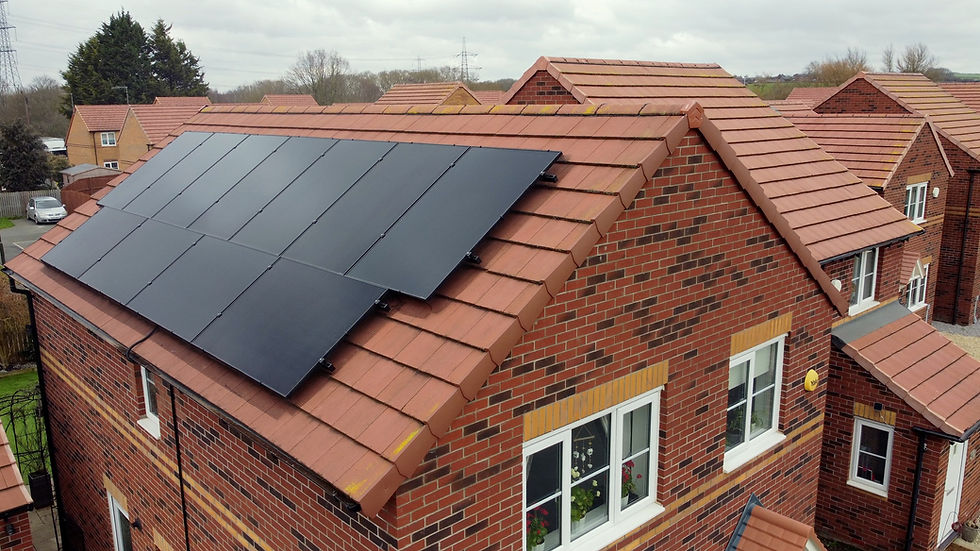
Rhys Phillips, renewable energy specialist, Next Energy, warns homeowners of the things they should look out for before jumping in to buy plug in.
Rhys said, ‘The growing popularity of plug-in solar shows that more Britons are looking for accessible ways to take control of their energy costs and reduce their reliance on the grid.
‘However, it is important that homeowners go into the purchase with realistic expectations. Plug-in solar can be a great entry point into renewable energy, but it shouldn't be viewed as a direct replacement for a full rooftop solar system.
‘The amount households can save depends on several factors, including where the panel is positioned, how much sunlight it receives, and whether the electricity generated is used as it is produced.
‘Homeowners should also be aware that plug-in solar systems are designed to supplement grid electricity rather than replace it. Unlike a larger solar and battery set up, they won't necessarily provide power during a power cut or deliver the same level of energy independence.
‘Plus, without battery storage, households may export or miss a proportion of the clean energy they generate. While plug-in solar can be a useful starting point, pairing generation with storage is often what unlocks the greatest long term value.
‘Before investing, consumers should consider their property's suitability and think carefully about the savings they can realistically achieve over time.’
Despite the fact that this renewable energy source has been in the UK for decades and now powers more than 1.5 million homes, many long standing myths still persist today. Rhys shares advice to homeowners who might be unsure if their roof is eligible for solar.
Myth 1: my roof faces the ‘wrong’ way
Rhys said, ‘While it is undoubtedly true that there is a ‘best’ orientation to place solar panels – south facing for the most sun throughout the year, just like a garden – there is not a configuration that means solar is a total no go.
‘In the UK, the average array of solar panels installed on a roof will get 71% of its energy in spring and summer, with the other 29% in autumn and winter. How to maximise that depends entirely on the home.
‘Installation experts will advise on the expected energy generation from roof mounted panels depending on how the roof is positioned. South is optimal, while east/west splits perform highly effectively for morning and evening use.
‘Installers also check that the property roof doesn't have any obstructions, so there is no big chimney stacks for instance, no Velux windows or dormers or anything which would reduce the amount of space for panels.
‘If a roof is predominantly north facing, then the energy return from any panels located there will be less. This doesn’t mean solar isn’t for you, but it does mean that the installation ‘paying for itself’ will take longer and other options might be added to the mix. The company doing the installation will advise on this, perhaps suggesting you supplement the panels on the roof with panels in the garden as an auxiliary.’
Myth 2: my roof is the ‘wrong’ angle
Rhys continued, ‘The best angle for a roof with solar panels is between 30 and 45 degrees. And the good news is that covers the vast majority of UK homes.
‘If a roof is a shallower angle – between 10 and 30 degrees – panels will still generate good power, but installers may use elevated mounting frames. Additionally, a minimum tilt of 10 degrees is needed so rainwater can naturally wash away dirt.
‘A fully flat roof is liable to collect dirt, water and other materials that would impact performance. However, this accounts for less than 10% of UK homes.’
Myth 3: solar panels on my roof will wipe thousands off the value of the house
‘Research by Swansea University found that owning solar panels increases a UK property’s sale value by 6.1% to 7.1%,’ said Rhys.
‘On an average priced home, this equates to an added £14,000 to £16,000. This is largely because every home has an energy performance certificate (EPC) rating if it has been bought or sold in the past decade. It is a lettered system, so you have got A, B, C, D and so on – the more efficient your home, the higher the rating.
‘This is all about assessing the energy efficiency of a home and solar panels can take your performance to the next level. That becomes a lot more attractive to prospective buyers.
‘The sleek design of modern solar panels also means that the aesthetic of a home will not be impacted by the installation of solar panels, which is a very important consideration for many of us.
‘With instability in the energy market globally, including price rises domestically, there has never been a better time to consider the benefits of solar power.’
Myth 4: the upfront cost is too much
Rhys said, ‘Finance is available to spread the upfront cost of installation, as well as government grants in many areas.
‘From personal experience, I know that people love tracking their savings daily and in real time using apps, it is one of the things homeowners with solar cannot wait to show you!
‘Savings wise, each home is different and energy usage is also different, but on average a saving of £700 on bills annually is not unrealistic.
‘Installers will advise about maximising the use of tariffs, exporting electricity back to the grid, and thinking a little bit more about when the house uses energy.
‘For instance, do you put washing on in the daytime when it can be directly solar powered, or store that power in a battery to use at night when tariff costs might be lower? Each homeowner will have a different configuration, and installers are well used to advising on best practice.’
Installing solar panels now has never made more sense and homeowners can lower bills from day one, protect themselves against future price hikes, and eventually generate income from unused energy.


Comments