


Reintroduced butterfly numbers rocket by 922% after sunshine ‘turbo charges' caterpillar growth
Sightings of a reintroduced butterfly have rocketed by 922% just two years after the species was returned to a Northamptonshire woodland.
Wildlife charity Butterfly Conservation recorded 746 Wood White sightings at Fineshade Wood this year, compared with 73 in 2025.
The project started just a year before in 2024 when the project team translocated 20 adult butterflies to Fineshade Wood from Hazelborough Forest and Bucknell Wood in South Northamptonshire – all Forestry England sites.
The team released an extra 23 butterflies at Fineshade last summer and volunteers counted a total of 73 all year – now the population has exploded with nearly ten times the number of sightings per hour.
Butterfly Conservation Central England conservation manager Dr Jamie Wildman said, ‘The number of butterflies being seen by our volunteers and members of the public is absolutely extraordinary: we are delighted to see the population boom so quickly since the start of the reintroduction.’
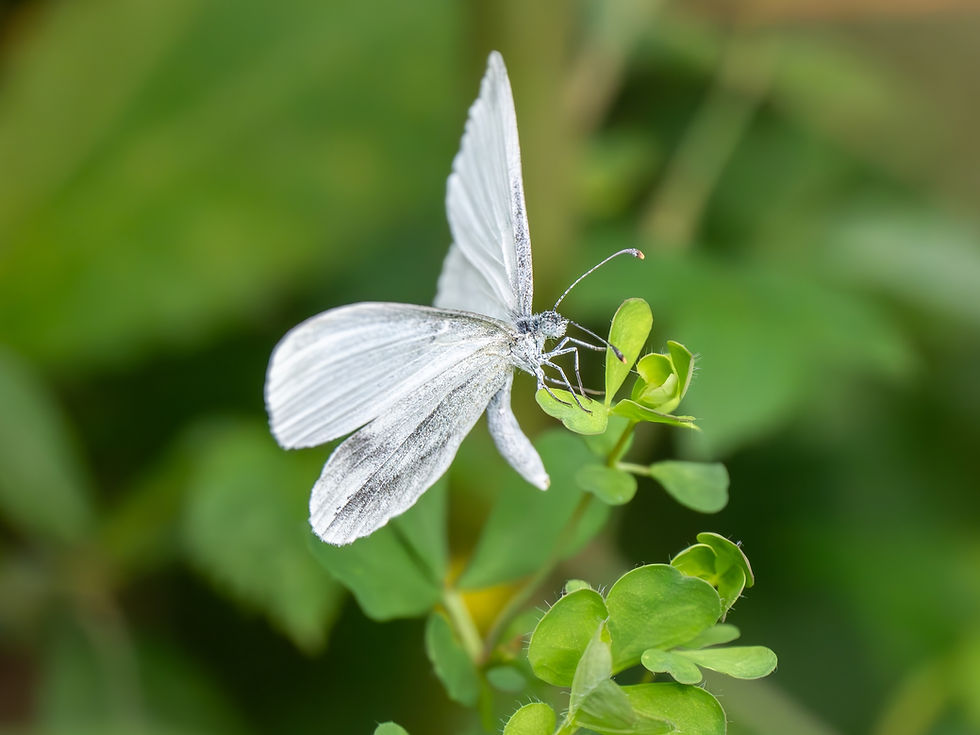
The Wood White is a delicate butterfly that has cream coloured wings with furry fringes. Males perform courtship displays in which they land opposite females, extend their tongue like proboscis and wave their head and antennae back and forth over the female’s wings.
The species used to be found across southern England into eastern Wales, but since 1992 its distribution has plummeted by 76%. It depends on sunny, sheltered woodland habitats with abundant wildflowers and caterpillar foodplants – conditions that have become increasingly scarce as land management practices have changed.
The butterfly now survives in only a dozen fragments of its former range across southern England and Wales.
Butterfly Conservation began reintroducing Wood Whites to Fineshade Wood in 2024 with funding from Natural England's Species Recovery Programme. Fineshade is one of the largest remaining ancient woodland complexes in the Rockingham Forest landscape, making it an ideal location for a reintroduction.
This year, one volunteer counted 42 Wood Whites on a single day, July 15, which the charity believes were second generation butterflies – offspring of the first brood which hatched in May.
While this year's warm spring weather is likely to have accelerated caterpillar development, it would have counted for little without years of painstaking habitat management by Butterfly Conservation and Forestry England to maintain open rides (grass pathways through the forest) and create suitable conditions for vital caterpillar food plants such as Bird's-foot Trefoil and Meadow Vetchling.
Butterfly Conservation director of nature recovery Dr Dan Hoare said, ‘If the ground is wet enough to start with and the foodplants are in the ditch edge, sheltered and supported by taller grasses, then the heat may have turbo charged larval growth and helped them get through before the worst of it.
‘The benefit of the work we have done at Fineshade in partnership with Forestry England is to create an extensive and variable network of rides, so that during a heatwave the Wood Whites can move to the grassier, cooler ones. As butterflies are so sensitive to temperature, tracking their fortunes can provide crucial insights on which species might be winners and losers from our rapidly changing climate, helping us plan effective climate adaptation.’
Since this year's Wood White surveys started, England has experienced its driest July on record which will now have an effect on caterpillars, but Butterfly Conservation and Forestry England will continue to monitor the site and try to make it as resilient as possible against a changing climate.
If they are successful, the charity says Fineshade Wood will act like a 'beating heart' for the Wood White, sending butterflies out into the surrounding countryside and woodland and helping to secure the species' future in Northamptonshire.
Mark Underwood, forest centre manager at Forestry England Fineshade, said: ‘It is great to see such an amazing statistic on the increase of Wood White butterflies. I know anecdotally Forestry England staff and our visitors have been spotting lots of these beautiful butterflies when they are out in the forest at Forestry England Fineshade. We are proud to partner with Butterfly Conservation on such a successful reintroduction.’
Dr Jamie Wildman said, ‘The many records submitted by Butterfly Conservation volunteers and members of the public help us understand where Wood White has been seen at Fineshade, and these data allow us to refine our management of the site and give the colony the best possible chance of becoming self-sustaining.
‘Only two years ago we were releasing butterflies here in the hope that one day the woodland would support a thriving population again. Seeing hundreds of Wood Whites flying through Fineshade today shows what is possible when habitat restoration, scientific research and hundreds of volunteer hours come together.’


Comments